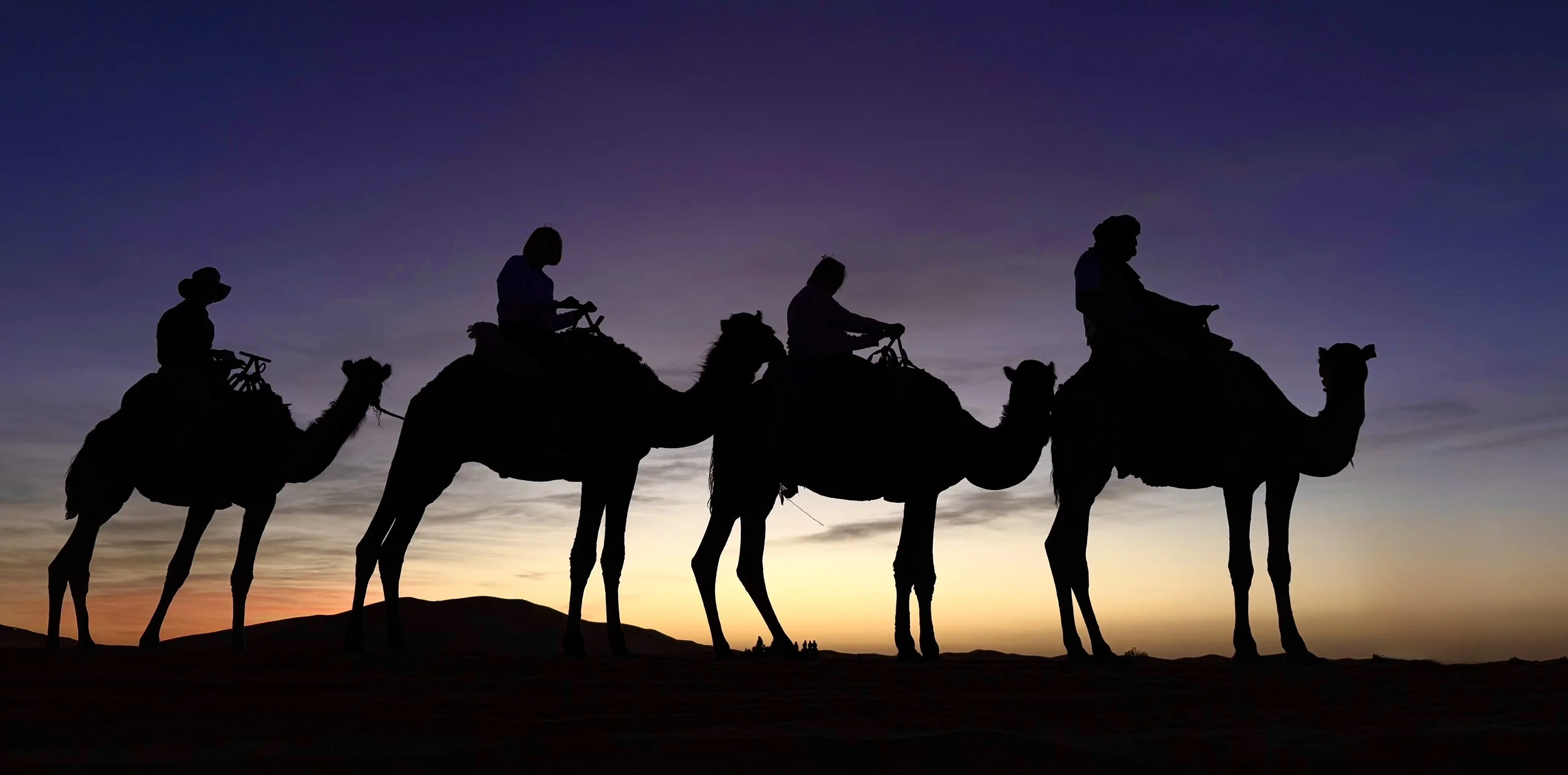
Sunset Erg Chebbi Dunes Sahara Desert
Ergs (from Arabic for "dune sea") are vast, extensive regions covered by windblown sand dunes, forming dramatic "sand seas" with little vegetation. They are dynamic, wind-sculpted landscapes created by aeolian (wind) processes, contrasting with the rocky plains (regs) that make up most of the desert, and contain some of Earth's most mobile sand.
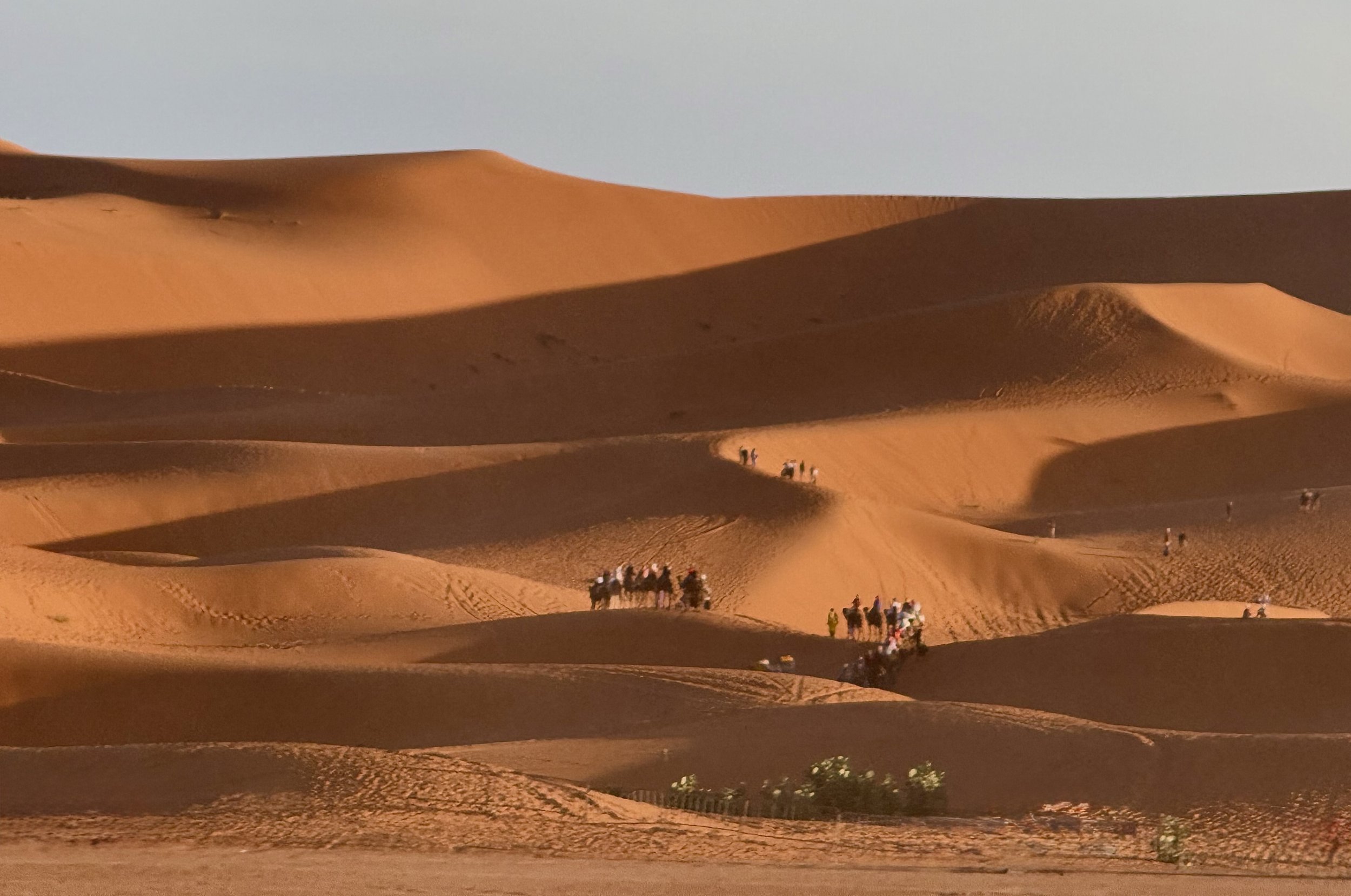
Erg Chebbi Sand Sea Dunes
Sahara Desert Sand Sea Dunes Er-Rissani Morocco: ergs (from Arabic for "dune sea") are vast, extensive regions covered by windblown sand dunes, forming dramatic "sand seas" with little vegetation. They are dynamic, wind-sculpted landscapes created by aeolian (wind) processes, contrasting with the rocky plains (regs) that make up most of the desert, and contain some of Earth's most mobile sand
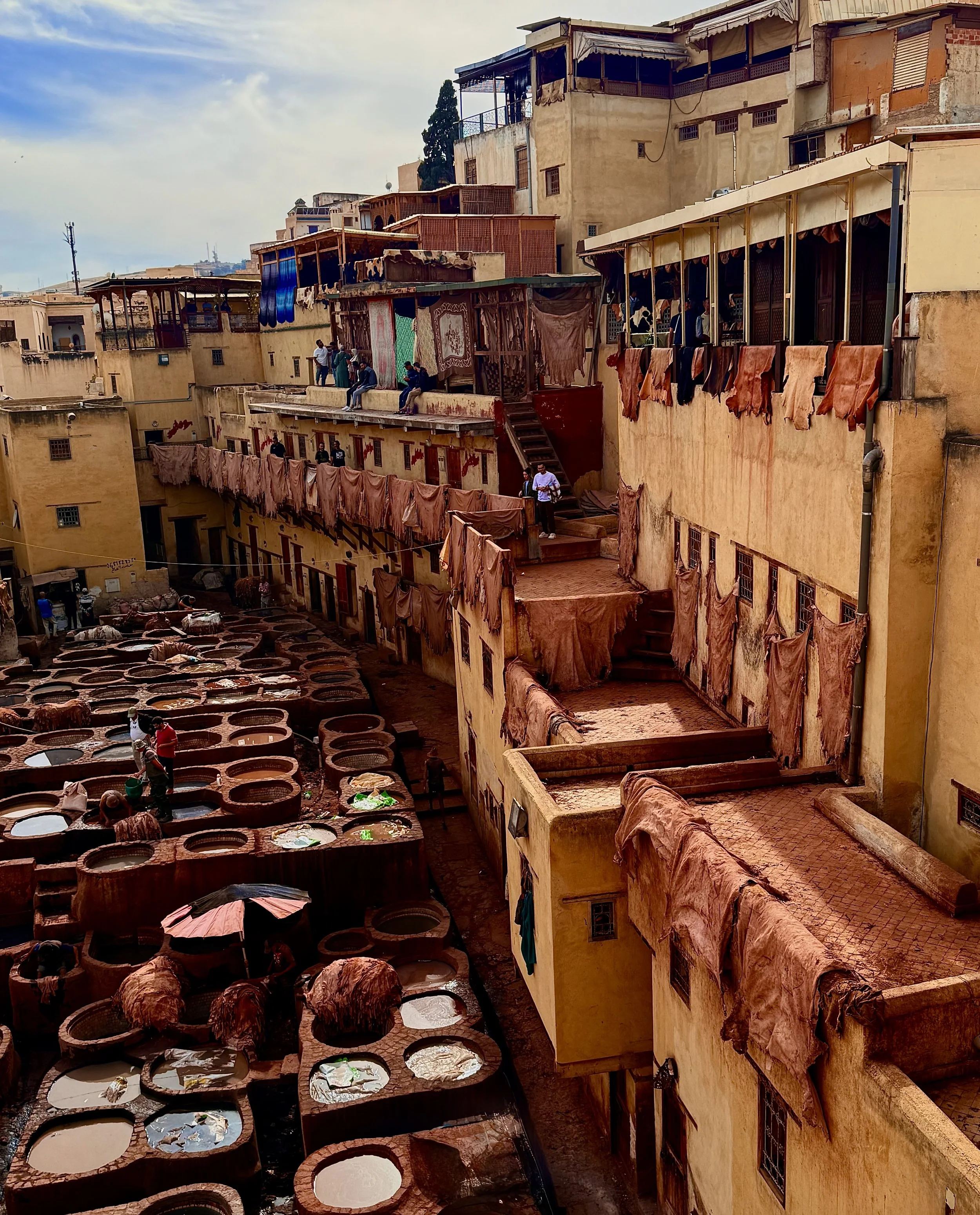
11th Century Chouara Tannery dye vats #1
11th Century historic Chouara Tannery in Fes, are traditional stone pits filled with natural dyes and chemicals, used for centuries to color hides with vibrant hues from indigo (blue), saffron/pomegranate (yellow), and poppy/paprika (red), mixed with pungent solutions of cow urine and pigeon droppings for softening and tanning. These iconic, colorful vats showcase ancient, manual leather-making processes for goat, sheep, and camel skins, creating products like bags, slippers, and jackets.
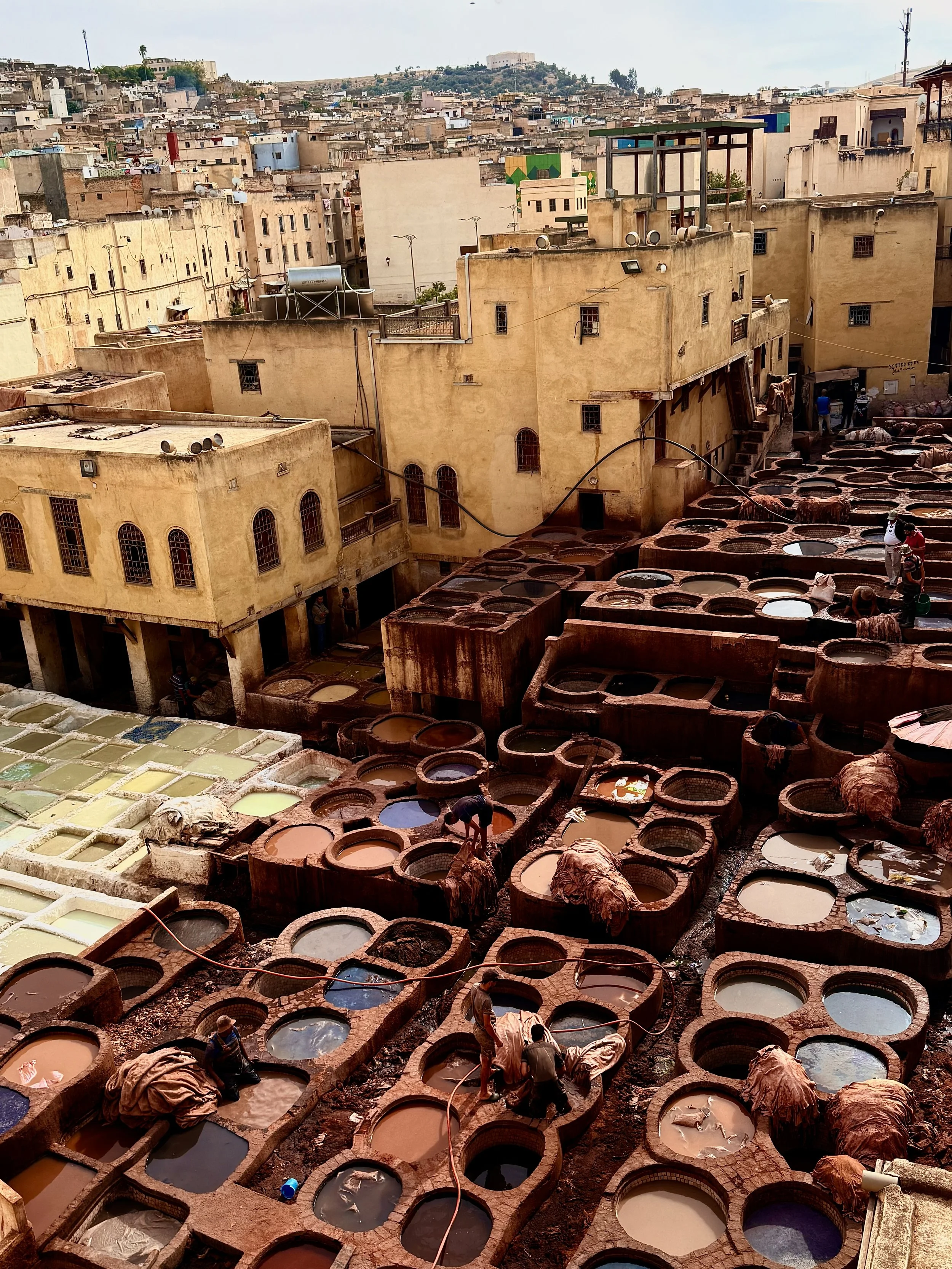
11th Century Chouara Tannery dye vats #2
11th Century historic Chouara Tannery in Fes, are traditional stone pits filled with natural dyes and chemicals, used for centuries to color hides with vibrant hues from indigo (blue), saffron/pomegranate (yellow), and poppy/paprika (red), mixed with pungent solutions of cow urine and pigeon droppings for softening and tanning. These iconic, colorful vats showcase ancient, manual leather-making processes for goat, sheep, and camel skins, creating products like bags, slippers, and jackets.
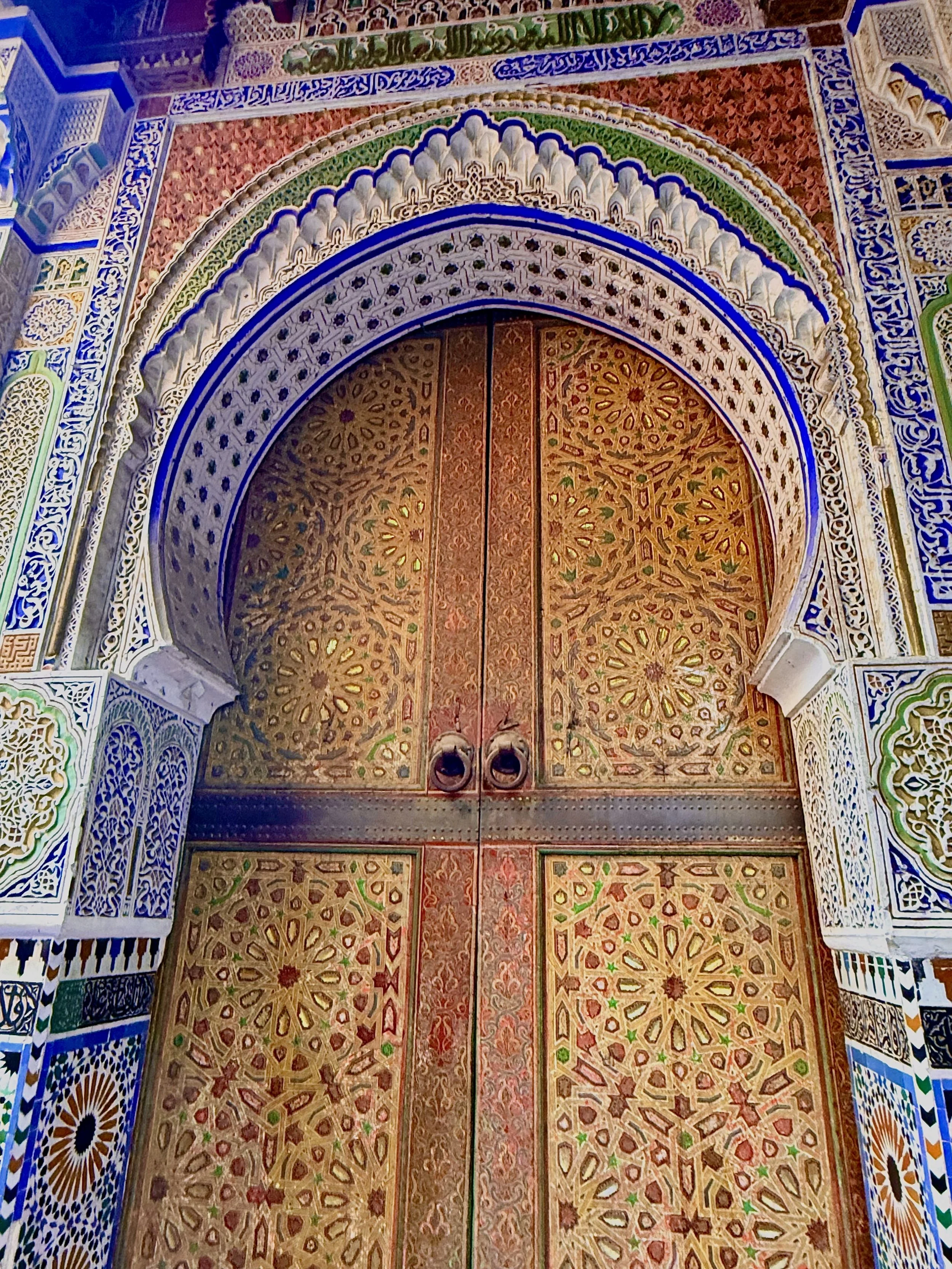
Door in Fès el-Bali Medina
The Medina of Fes (Fès el-Bali) is the ancient, walled historic center of Fes, Morocco, known as the world's largest and oldest continuously inhabited medieval city, a UNESCO World Heritage site famous for its labyrinth of over 9,000 narrow, car-free streets filled with traditional souks (markets) selling crafts like leather, spices, pottery, and lanterns, historic Islamic architecture, and bustling local life, making it a captivating but easily bewildering place to explore.
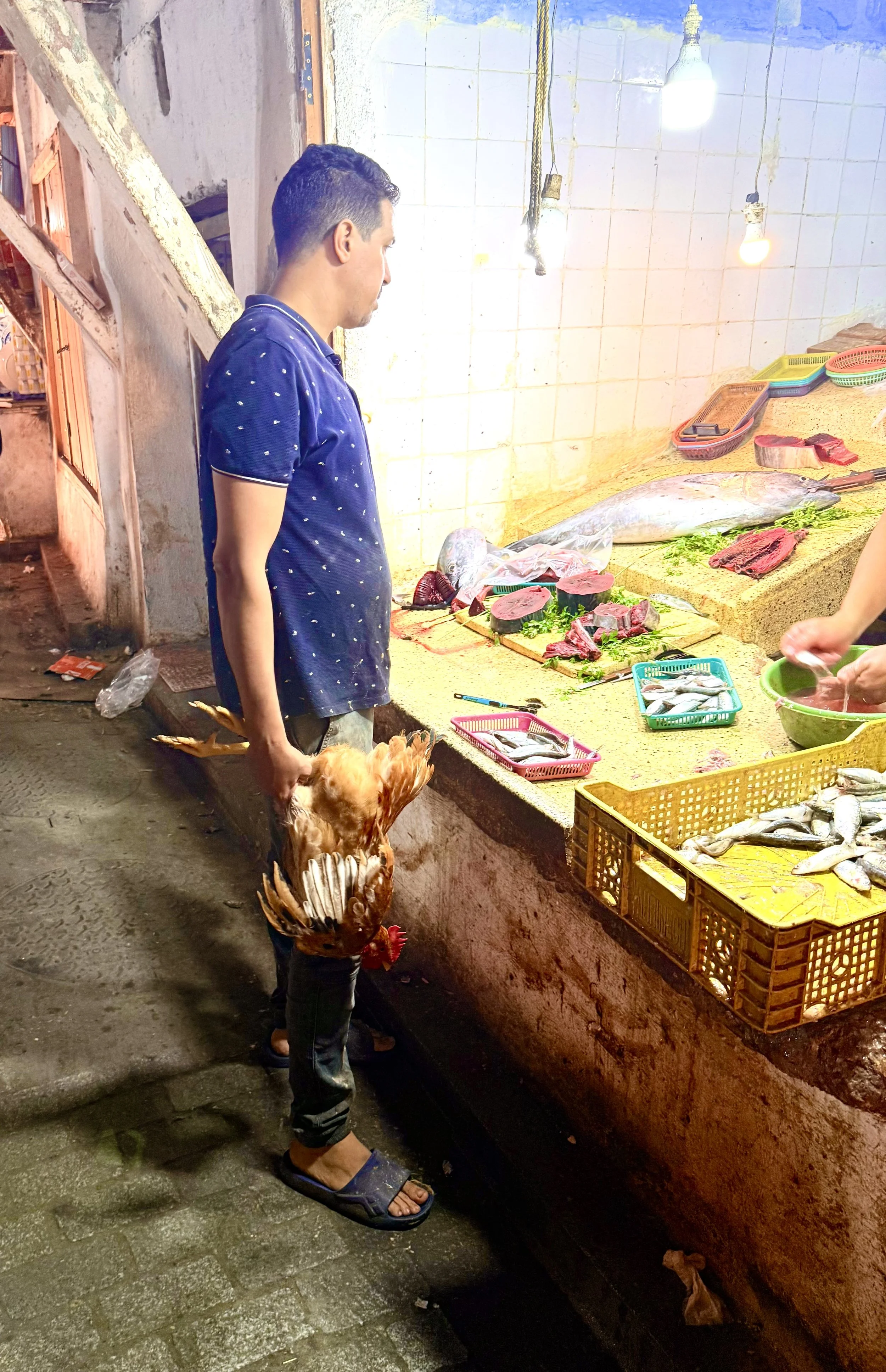
Butcher Shop Fès el-Bali Medina
The Medina of Fes (Fès el-Bali) is the ancient, walled historic center of Fes, Morocco, known as the world's largest and oldest continuously inhabited medieval city, a UNESCO World Heritage site famous for its labyrinth of over 9,000 narrow, car-free streets filled with traditional souks (markets) selling crafts like leather, spices, pottery, and lanterns, historic Islamic architecture, and bustling local life, making it a captivating but easily bewildering place to explore.
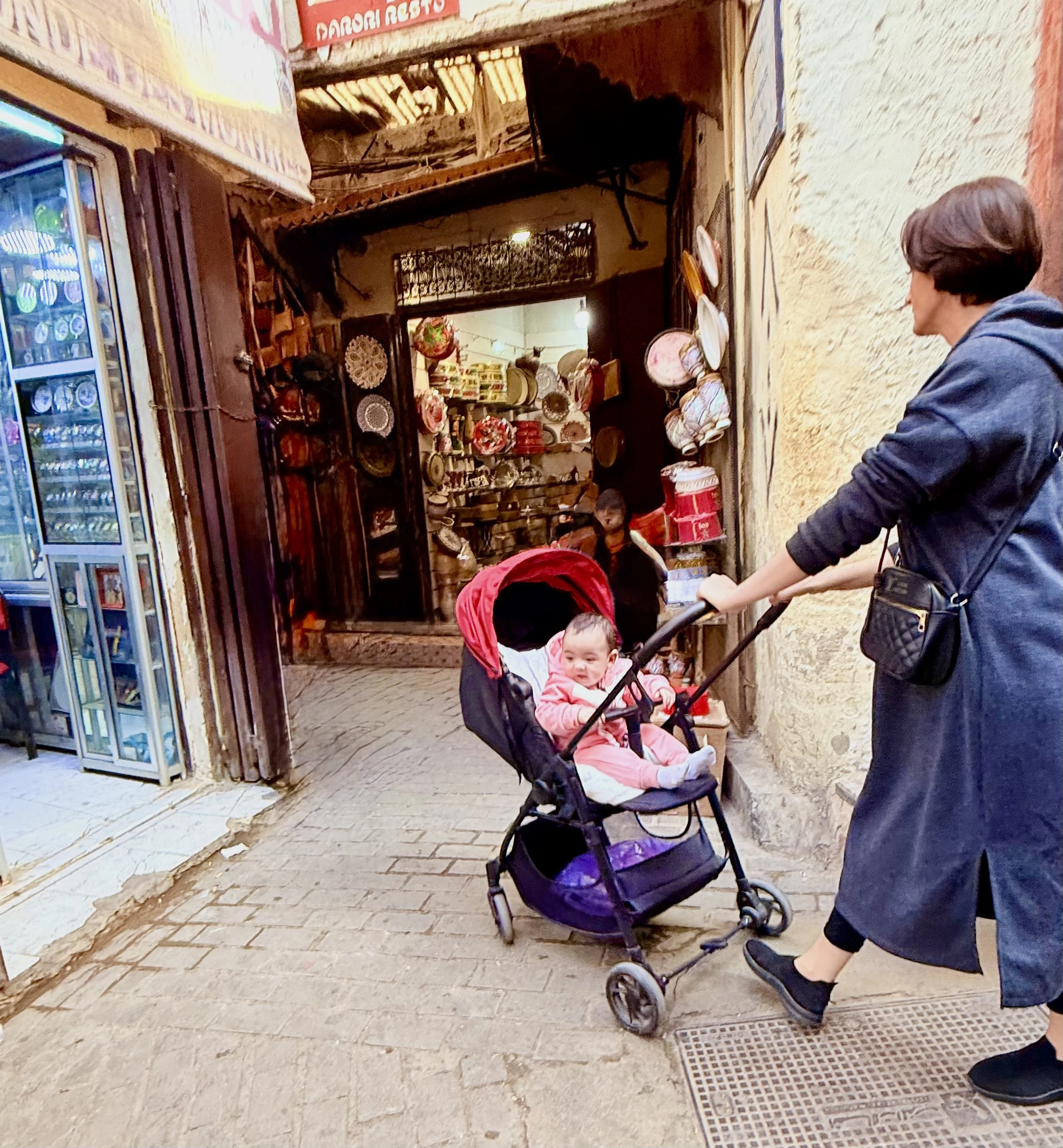
Entering Fès el-Bali Medina
The Medina of Fes (Fès el-Bali) is the ancient, walled historic center of Fes, Morocco, known as the world's largest and oldest continuously inhabited medieval city, a UNESCO World Heritage site famous for its labyrinth of over 9,000 narrow, car-free streets filled with traditional souks (markets) selling crafts like leather, spices, pottery, and lanterns, historic Islamic architecture, and bustling local life, making it a captivating but easily bewildering place to explore.
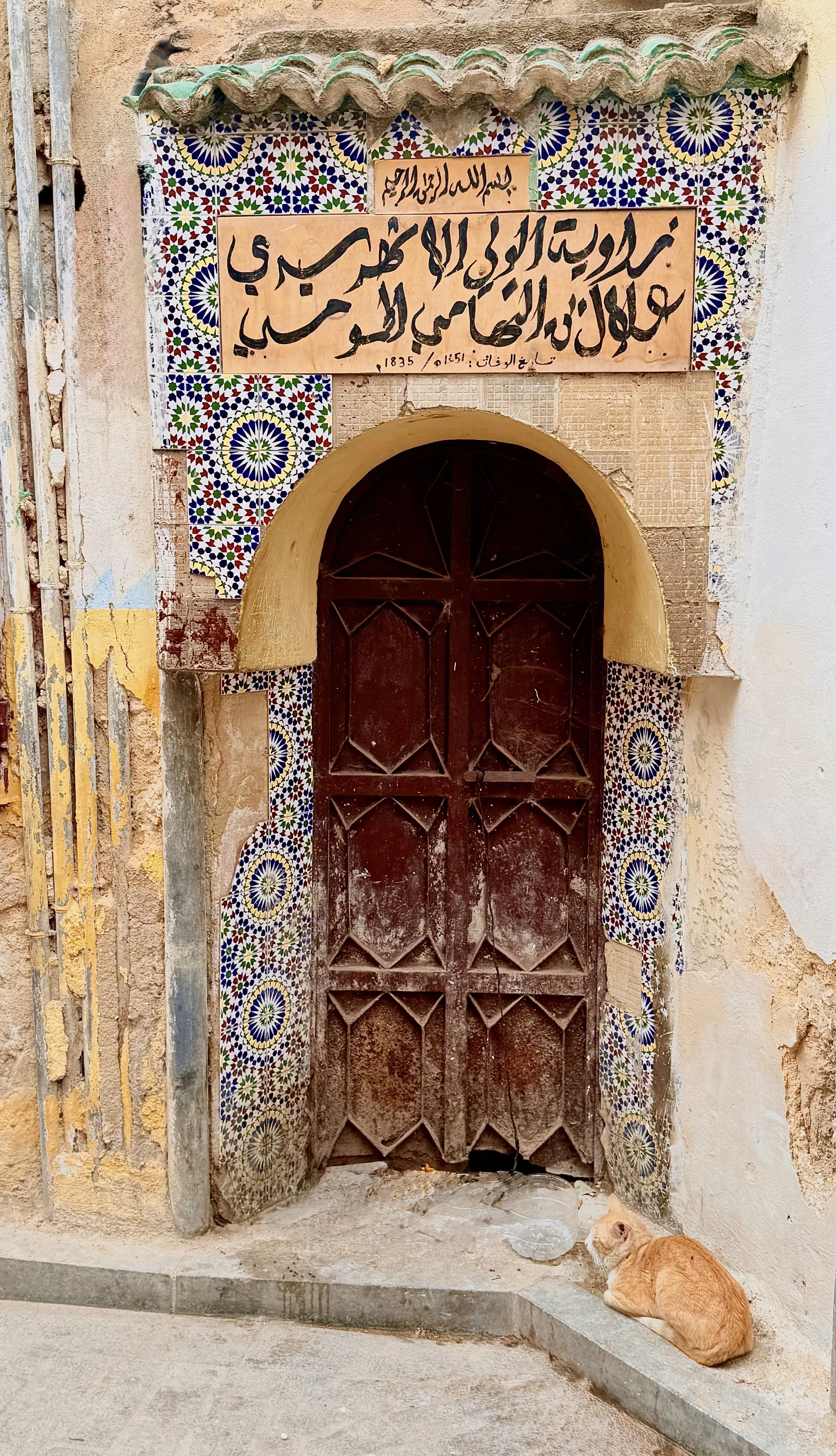
Moroccan Cats
As sacred creatures in Islamic culture, cats hold special status in Morocco. The Quran tells how Prophet Muhammad cut off his sleeve to avoid disturbing a sleeping cat, a respect passed down through millennia that makes felines the most beloved companion animals.
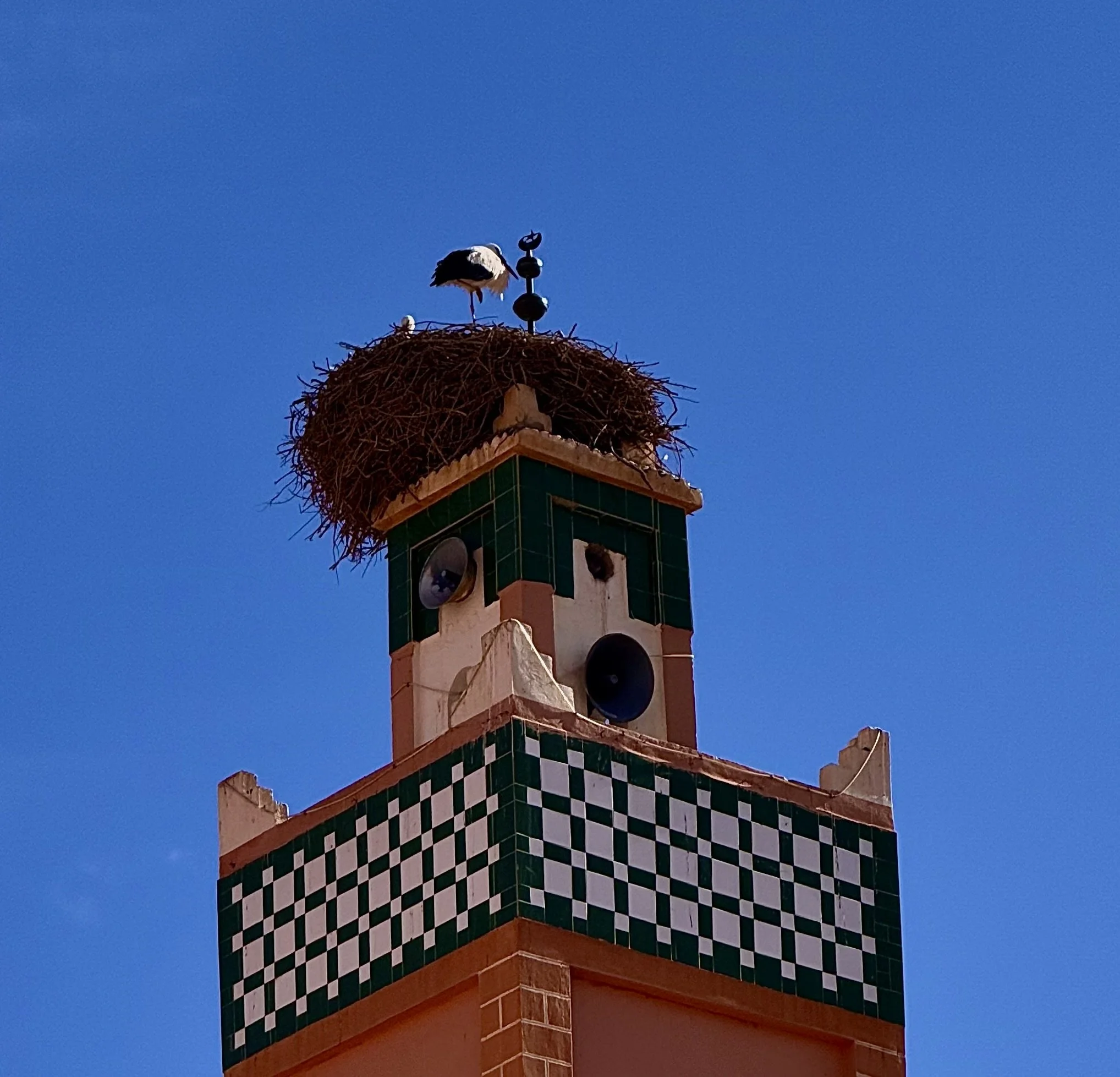
Stork nest Masque Tower Ait Zineb Morocco
Storks are large, long-legged, long-necked wading birds with long, stout bills. In folklore they are symbols of good luck, spring, and delivering babies, often nesting near humans on rooftops, which ties into their real-life nesting habits. They are carnivorous, migratory, build huge nests, and have unique features like beak clattering and leg-cooling, but their cultural role as family bringers is their biggest claim to fame.
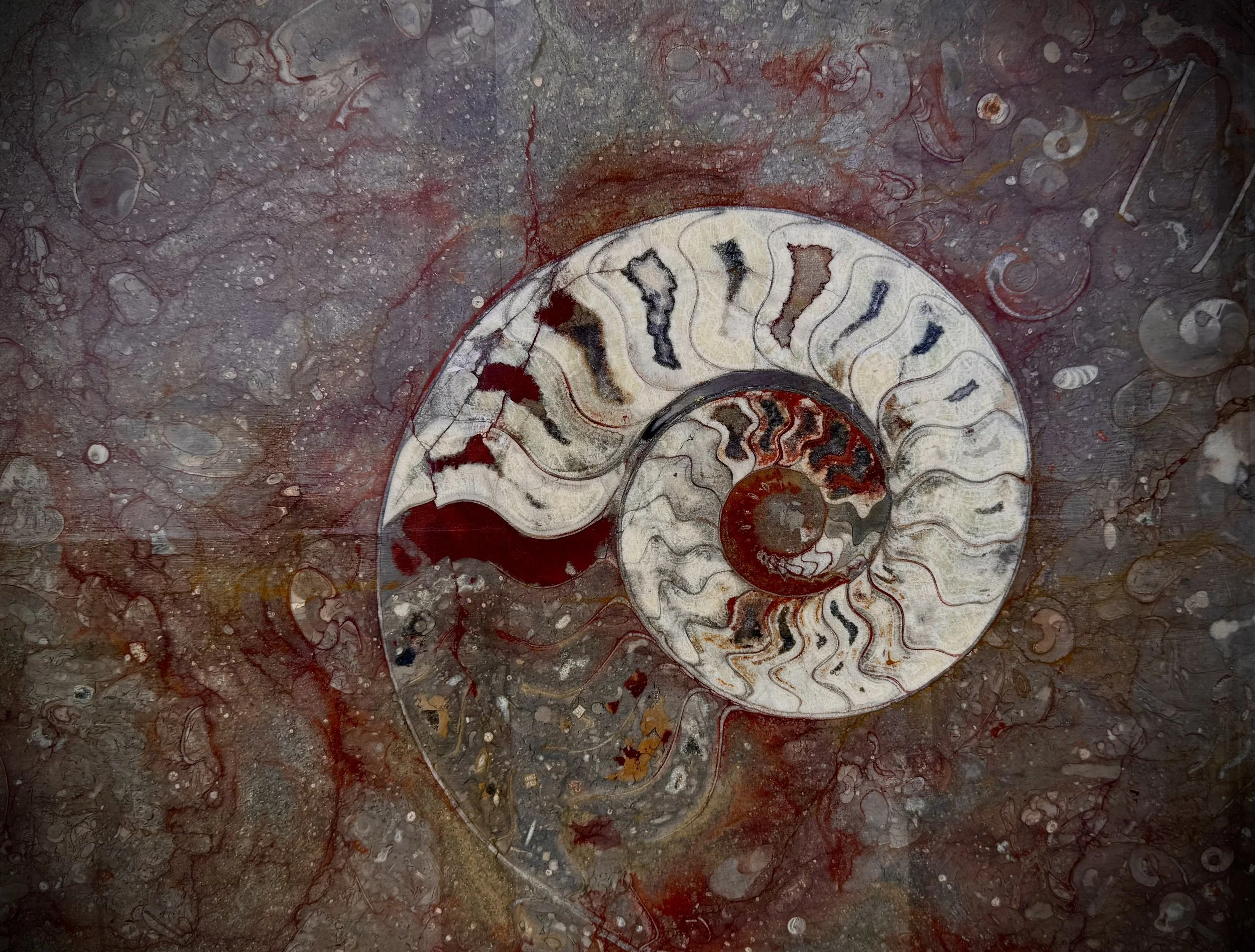
Jurassic Period Ammonite Fossil
Morocco is noted for its Jurassic ammonite fossils which are abundant, spiral-shelled marine cephalopod remains, crucial for dating rocks and understanding ancient oceans, characterized by chambered shells for buoyancy and distinct suture patterns (goniatite, ceratite, ammonite) that evolved in complexity, with famous finds on England's Jurassic Coast revealing these predatory mollusks that lived alongside dinosaurs.
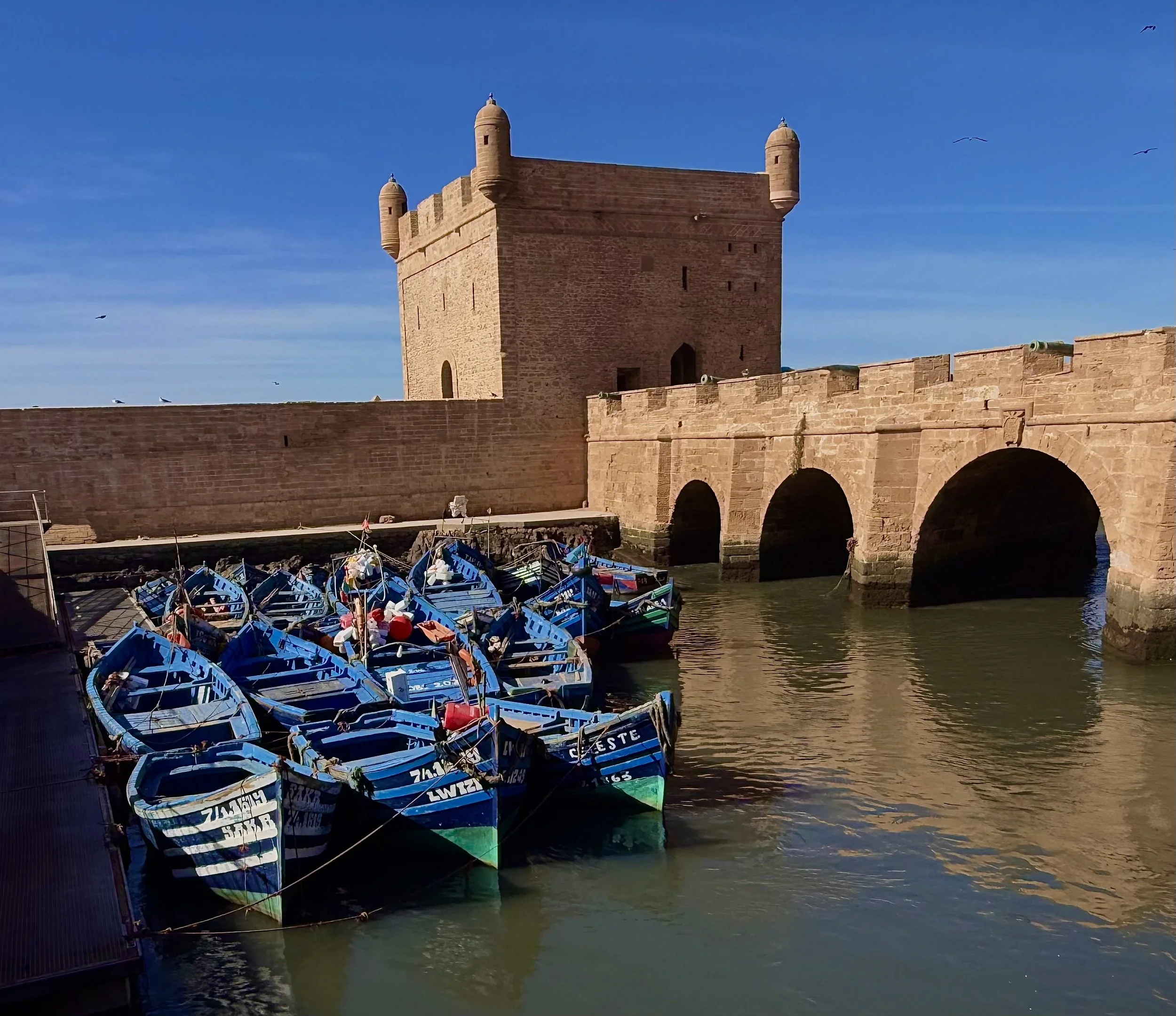
Essaouira Blue Boats
Essaouira's iconic blue boats at its historic 18th Century Trade Hub harbor reflect centuries of maritime trade, Portuguese influence, and local traditions, with the vibrant blue color possibly honoring the ancient Murex shell blue dye, deterring insects. Essaouira (formerly Mogador) became a vital port under Sultan Mohammed III, connecting sub-Saharan Africa with Europe, earning it the nickname "Port of Timbuktu". UNESCO World Heritage site.
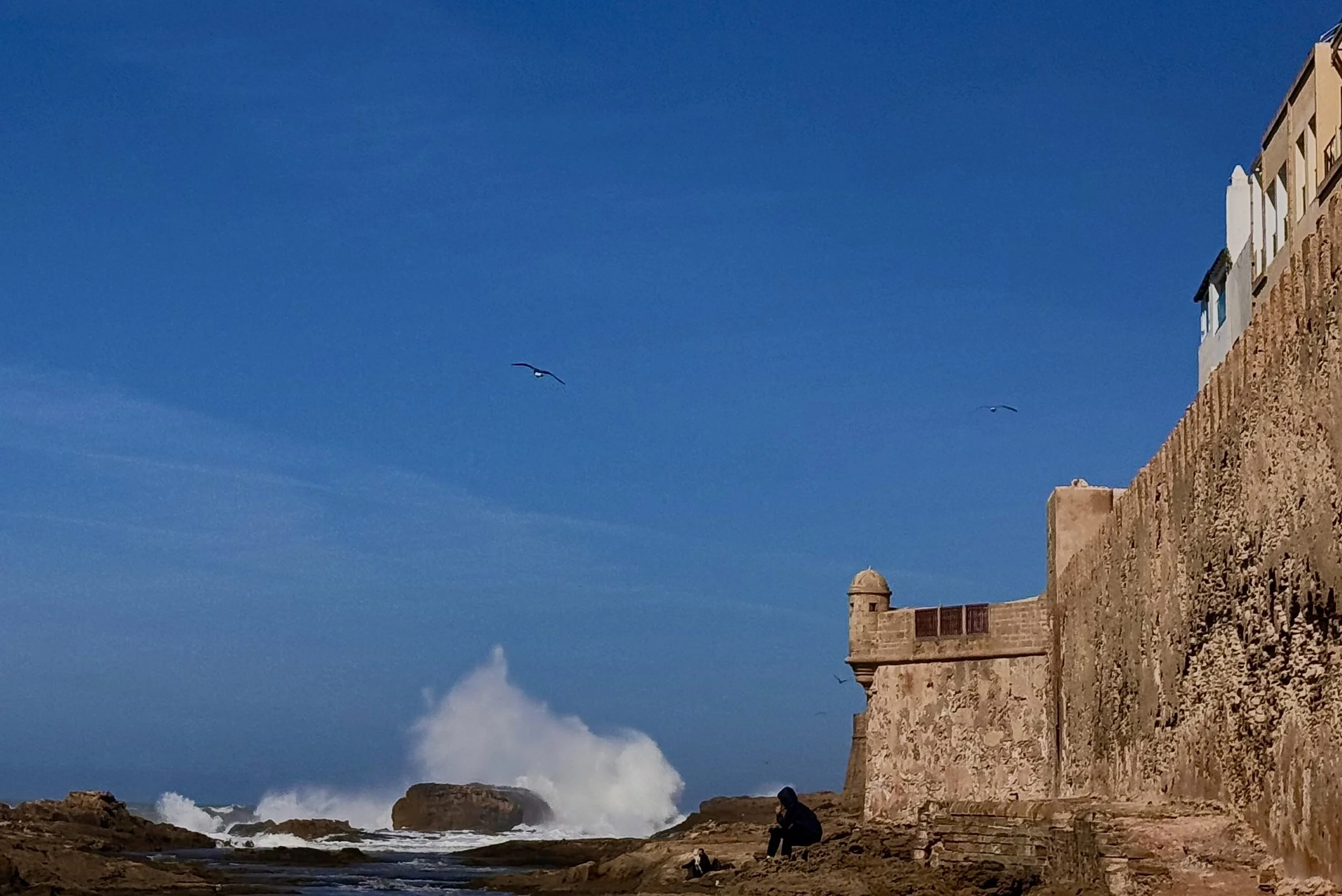
Essaouira Harbor Fortifications
UNESCO Site: The well-preserved fortified medina, historic ramparts and port are a UNESCO World Heritage site. Its historic ramparts were featured in Game of Thrones Movies.
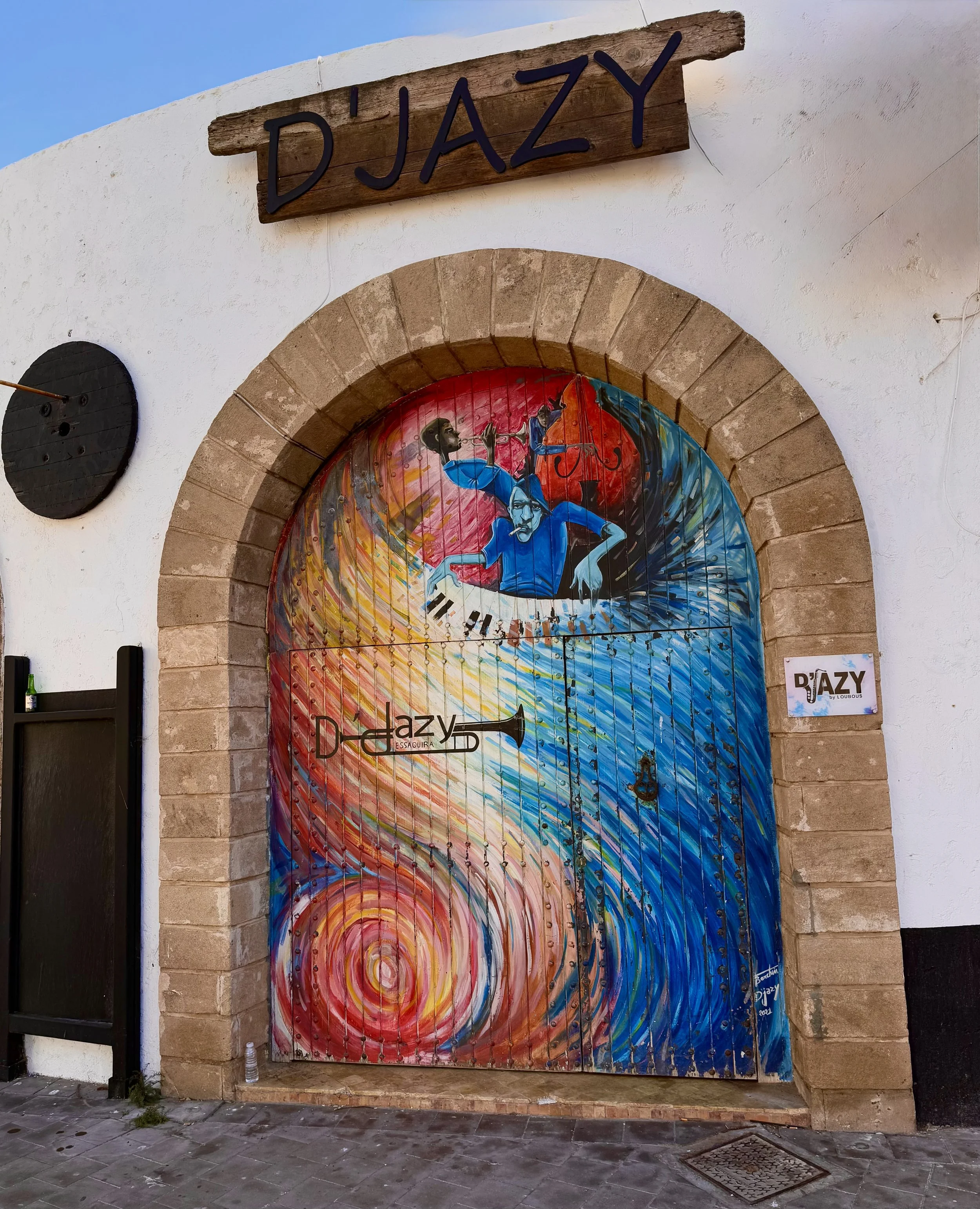
D’JAZY Essaouira
Essaouira's artistic vibe, UNESCO-listed medina, historic ramparts (featured in Game of Thrones), bustling fishing port with blue boats, vibrant Gnawa music scene (especially the annual festival), and strong Atlantic winds that attract surfers and kitesurfers. It's also famous for its thuya wood crafts, argan oil, fresh seafood, and bohemian, laid-back atmosphere compared to other Moroccan cities
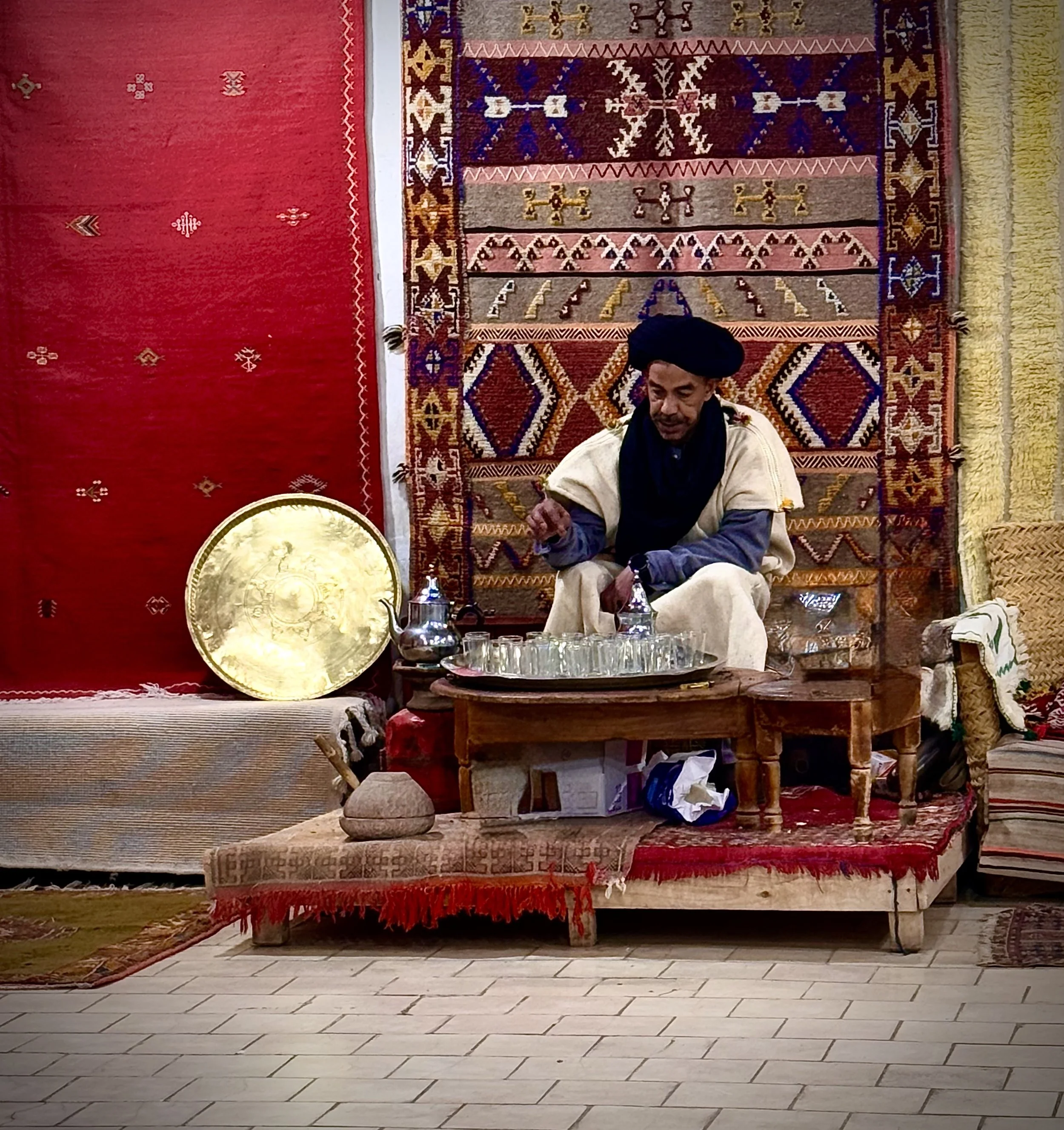
Carpet Merchant Tinghir Morocco
Tinghir, Morocco, is famous for its authentic Berber carpets, handwoven by local Amazigh women using traditional techniques and natural wool, often sold in cooperative shops like Maison Berbere or Maison de Cadeaux Berberes where you can experience mint tea, see demonstrations, and bargain for unique, culturally rich pieces direct from artisans. These handmade rugs feature vibrant colors and symbolic patterns, representing a significant cultural heritage, and buying from cooperatives directly supports these craftswomen, with prices varying by design, size, and intricacy
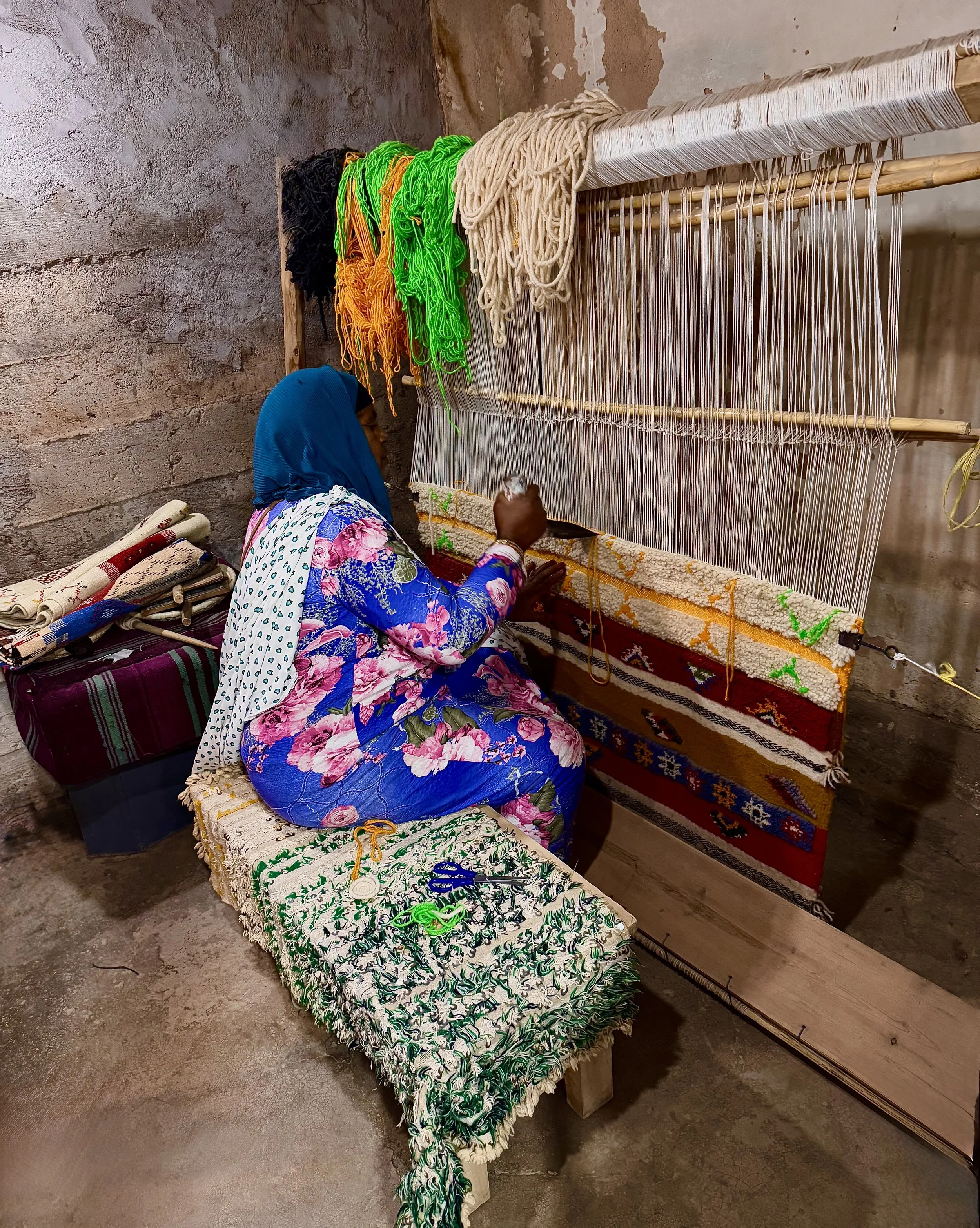
Carpet Weaver Tinghir Morocco
Tinghir, Morocco, is famous for its authentic Berber carpets, handwoven by local Amazigh women using traditional techniques and natural wool, often sold in cooperative shops.
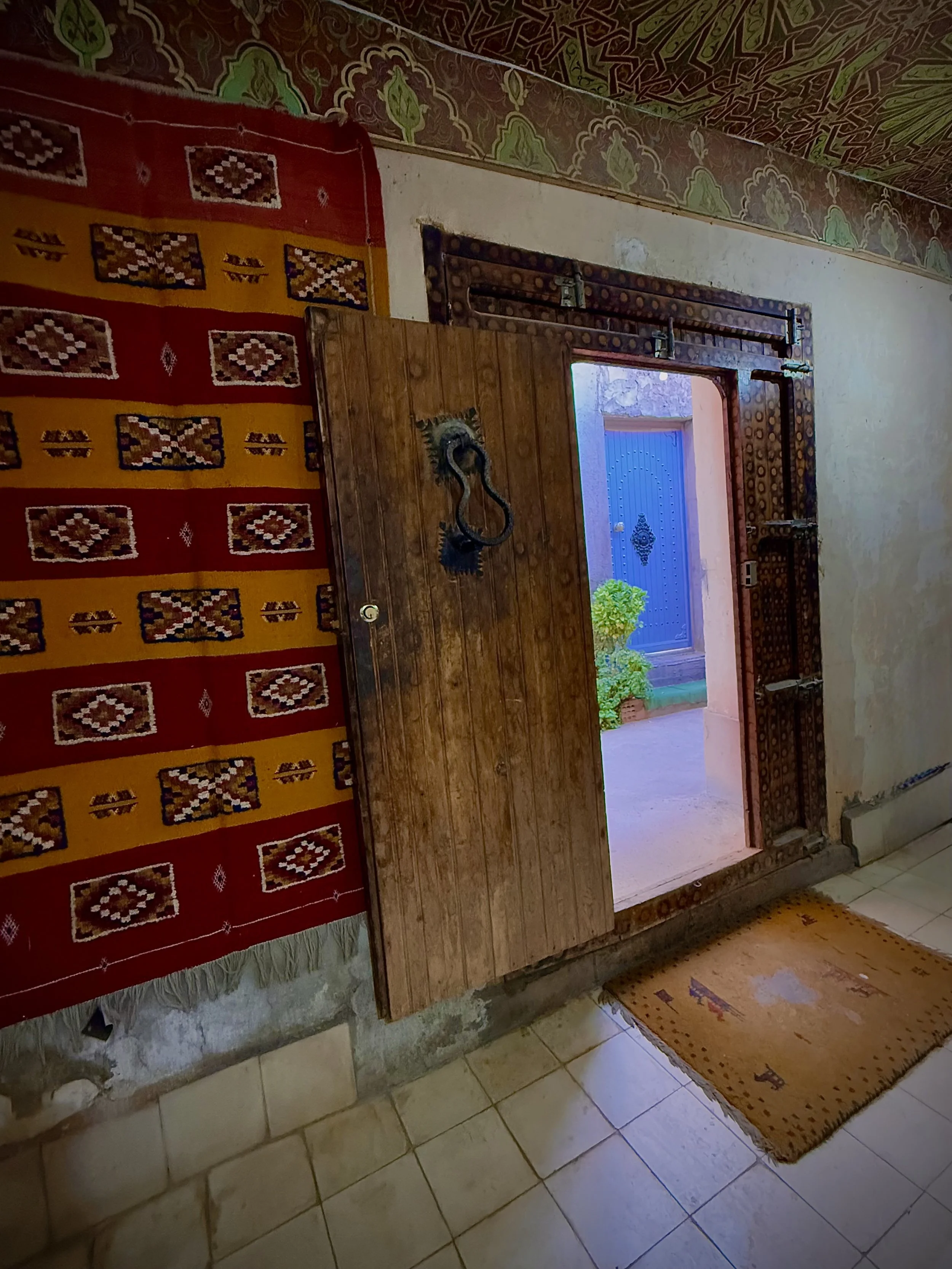
Carpet Coop Door Tinghir
Tinghir, Morocco, is famous for its authentic Berber carpets, handwoven by local Amazigh women using traditional techniques and natural wool, often sold in cooperative shops.
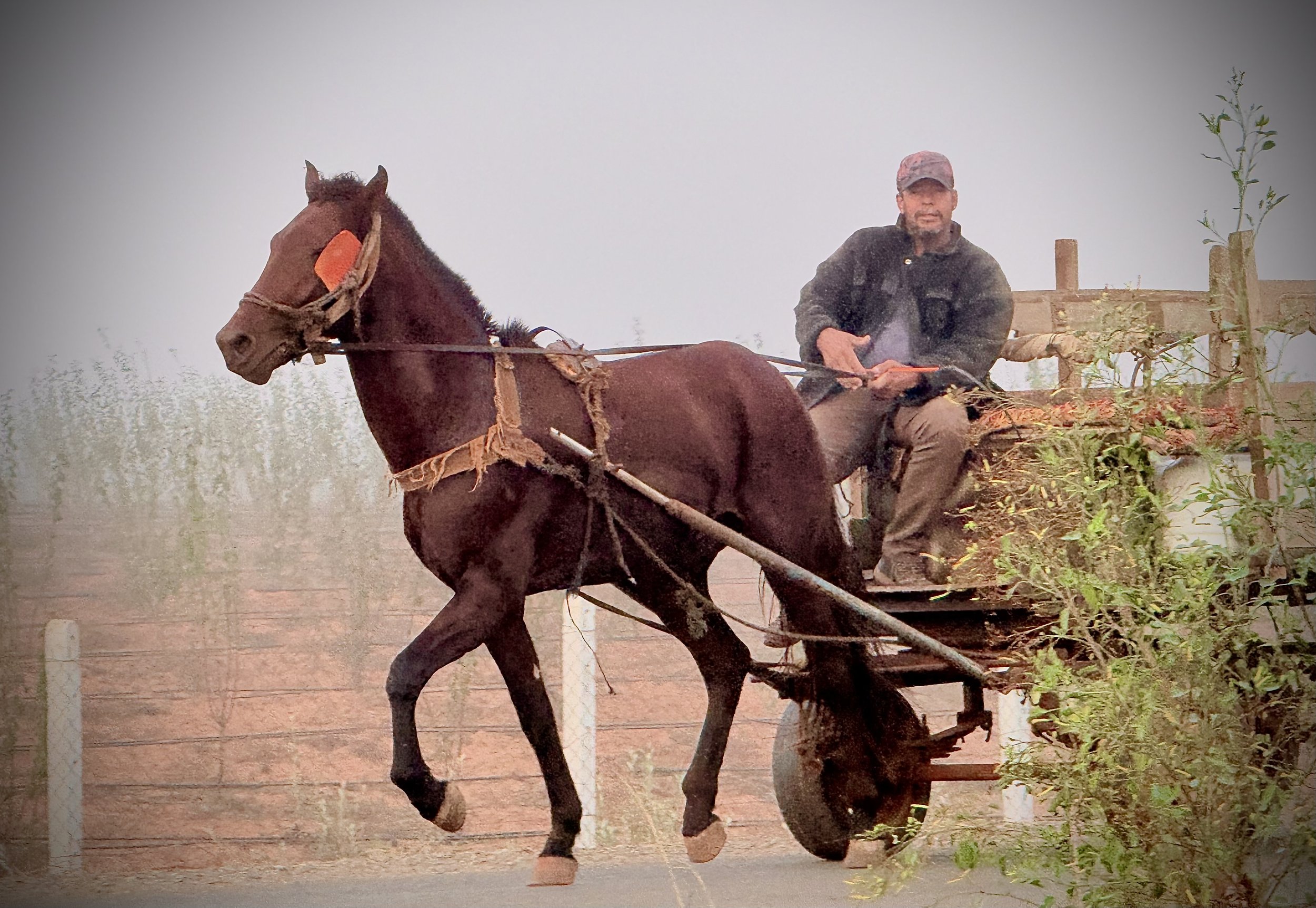
Horse Cart in Morning Fog
In the rural areas the simple ancient modes of transportation prevailed. However, Morocco boasts one of Africa's most modern train networks, operated by ONCF (Office National des Chemins de Fer). Trains are ideal for traveling between major cities.
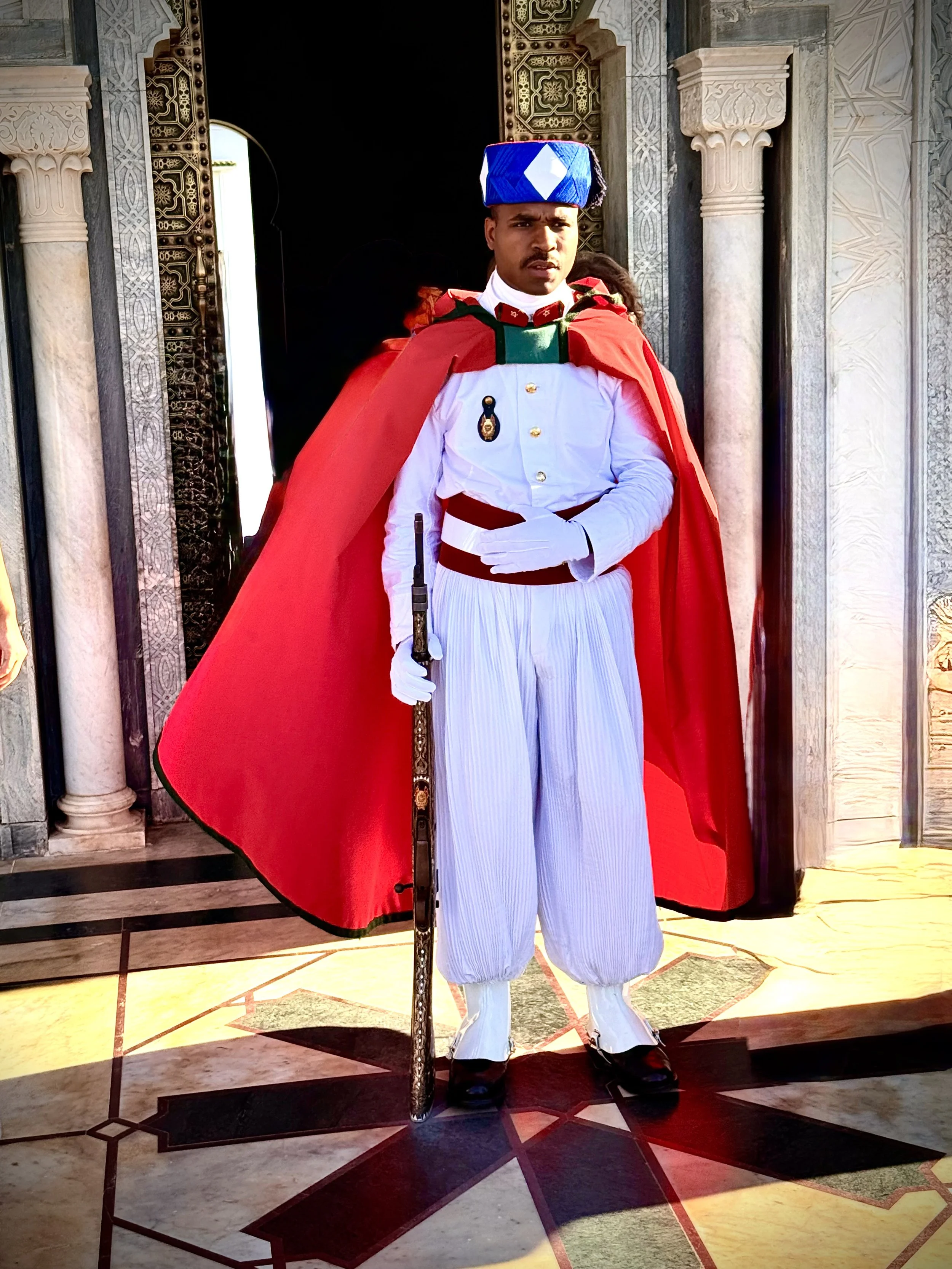
Honor Guard Mausoleum of Mohammed V Rabat
The Mohammed V Mausoleum is a crucial architectural and historical landmark in Rabat, Morocco. It houses the tombs of King Mohammed V and his two sons, symbolizing Morocco's journey to independence and showcasing exquisite Moroccan craftsmanship.
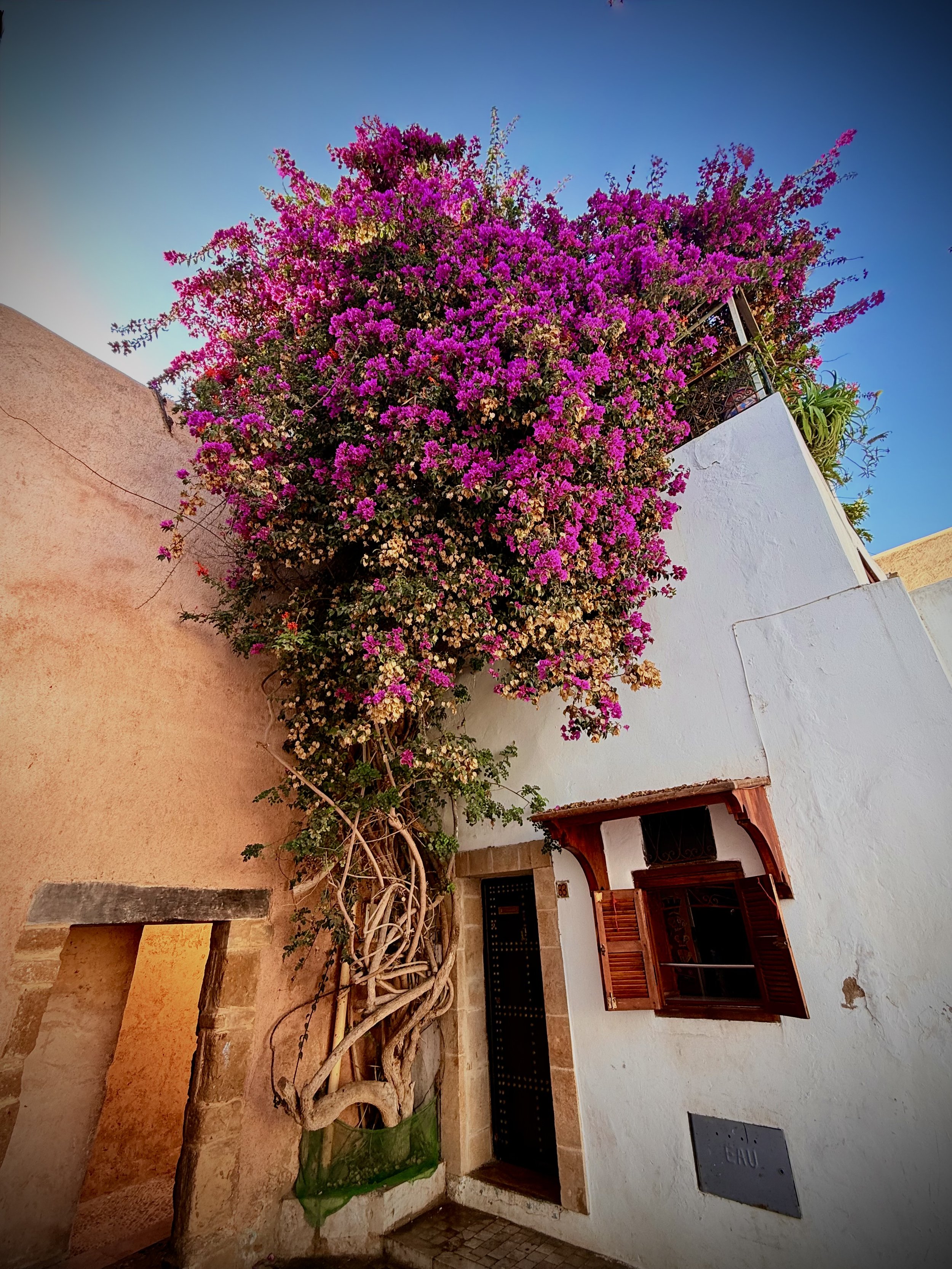
Bougainvillea Vine Rabat
Bougainvillea is a vibrant, thorny tropical vine known for its stunning, colorful bracts (modified leaves) in shades of pink, purple, red, or white, often grown on trellises, arbors in warm climates.
Morocco